There cannot be
many words less appealing to see included in the title of a cake than
vinegar. Corned beef perhaps? Mustard? Socks? I think
the vinegar is added to turn the milk into a buttermilk i.e. the acidity curdles
the milk a little. Rest assured; the cake does not taste of vinegar…now
that would be a tough sell! (Although perhaps not so much to me as I adore
vinegar and will put it on virtually any savoury item given the chance – try it
on cabbage for a taste sensation; you’ll never look back.)

This is a light
fruit cake – it’s not a full on ‘house brick in your stomach’ slab of Christmas
cake. It’s actually like a cross between light fruitcake and bread
pudding. Mr CC is always partial to a
light fruit cake so I thought I would make it for him to enjoy over the Bank
Holiday weekend. He did admit he was
repelled by the word ‘vinegar’ in the cake’s name but he got past it when a
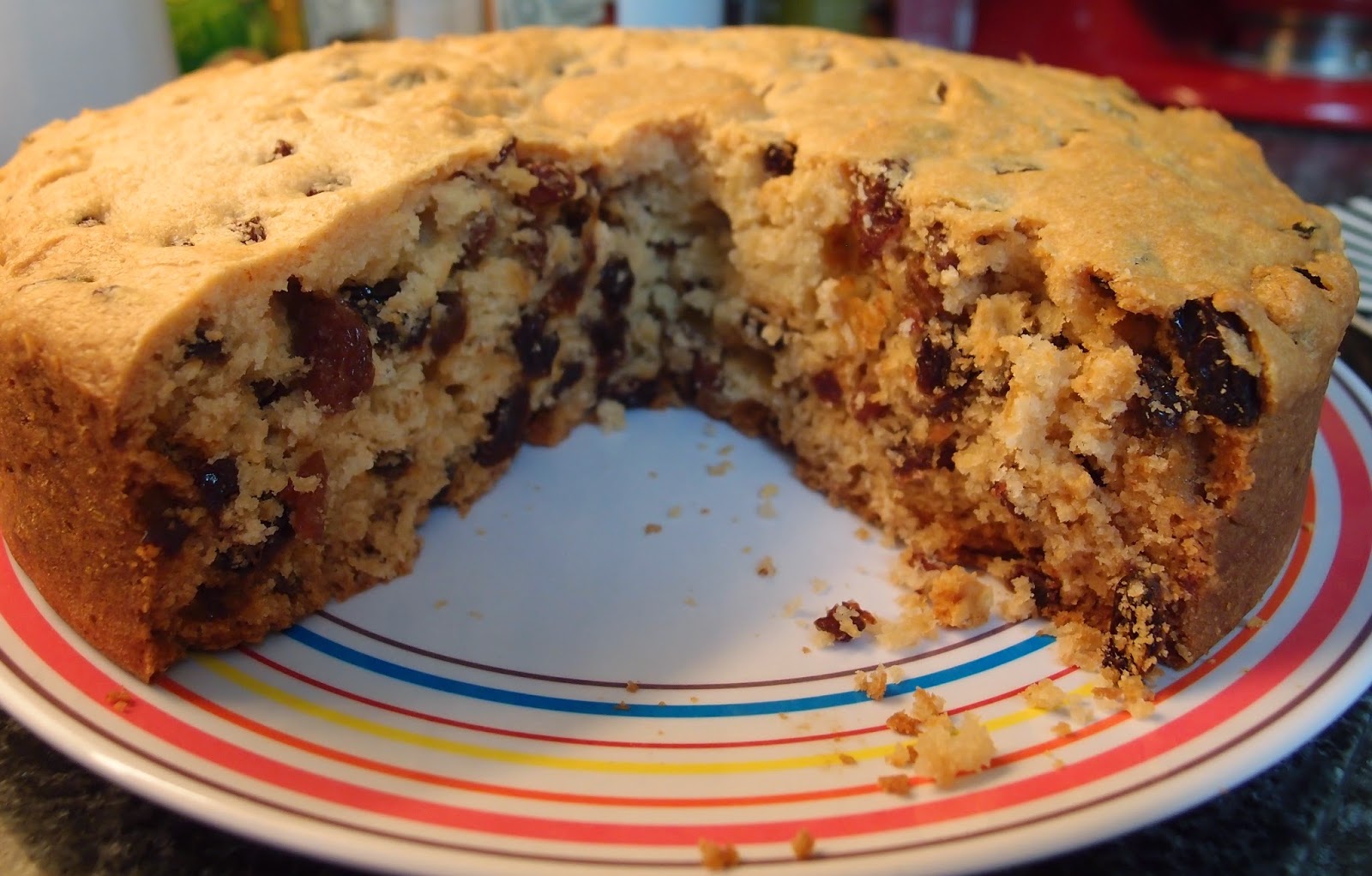
glorious sweet smelling fruit cake emerged from the oven. My photos probably make it appear
over-crumbly because I cut it when it was still slightly warm; normally I bake
the day before I cut but couldn’t this time.
Fruit cake has its haters and I can understand that if dried fruit’s not your thing then this is probably not your dream cake, but for me it’s a perfect concoction of cake and fruit, both of which I love. I also like its unfussy nature – no icings or buttercreams, no fancy preparation and no fancy equipment needed. It’s the sort of recipe our ancestors would’ve enjoyed and I take comfort in that. A fruit cake is like a big hug from the past.

It also keeps
well. The only thing better than cake is more cake. There is
nothing as pleasing as having a cake in the tin you can cut from every day
until it’s gone and it keeps getting better! Did I mention it’s a big
cake? And egg free, so people with egg allergies can enjoy it too.
Hurray!

Ingredients
450g
plain flour
225g unsalted butter
225g golden caster sugar
225g raisins
225g sultanas
275ml milk
2 tablespoons cider vinegar
1 teaspoon bicarbonate of soda
225g unsalted butter
225g golden caster sugar
225g raisins
225g sultanas
275ml milk
2 tablespoons cider vinegar
1 teaspoon bicarbonate of soda
Method
Preheat the oven
to 180°C/fan oven 160°C/ 350°F/ gas mark 4.
Line a 23cm
round springform tin with baking paper.
Place the flour
in a bowl and rub in the butter until you have a mix that resembles
breadcrumbs. You can do this in the food processor if you have dexterity
issues.
Stir in the
sugar, raisins and sultanas.
Measure out the
milk then remove one tablespoon of it into a small bowl.
Add the cider
vinegar to the larger amount of milk.
Stir the
bicarbonate of soda into the tablespoon of milk and ensure it is fully
dissolved.
Add to the milk
and vinegar mix. Nothing much will
happen initially but then a gentle frothing will occur and the liquid will puff
up - so make sure you’re using a jug
that can accommodate some growth!
Add the milk mix
to the dry ingredients and stir only enough to combine; don’t over mix. At first you will think there isn’t enough liquid,
but there is and you will end up with a lovely soft cake mix.
Spoon into the
prepared tin and level the surface.
Bake for 30
minutes before reducing the oven temperature to 150°C/fan oven 130°C/ 300°F/
gas mark 2.
Bake for a
further hour or until a skewer inserted into the cake comes out clean.
Check the cake after 40 minutes anyway, and if it’s browning too quickly cover
loosely with foil for the rest of the cooking time.
Leave to cool in
the tin on a wire rack for 30 minutes, or until it is cool enough to safely
handle.
De-tin and leave
to cool completely.
Bask in the
glory of the wonderful thing you have made.
Eat.