Showing posts with label tea. Show all posts

Sunday, 17 April 2016

Fruit tea loaf


This recipe came into being because I made a whim purchase.  Whilst visiting a Greek Cypriot supermarket on the quest for baklava (as instructed by Mr CC; if only all quests in life were this tasty!), I spotted a pouch of dried red and white mulberries.  I was starting from a position of ignorance: I didn’t know anyone other than silk worms ate mulberries, but, seeing as I didn’t see any silk worms doing their shopping I deduced that they must also be human food.


What caught my attention was their beautiful knobbly appearance.  I want to describe them as looking like a raisin that had suffered a severe allergic reaction to something but this wouldn’t convey how cute they are.  Texturally, they are similar to a dried fig i.e. they have a bit of grittiness about them.  They are also very dry, which was why I decided to use them in a tea loaf, where they’d have the opportunity to plump and rehydrate.


Having read up about mulberries they seem to be considered a superfood.  I always struggle with this term as – to me – most food is pretty darned super, but it is because they’re high in protein, iron and vitamins blah blah science etc.  They taste nice too – which is the most important thing; imagine a less sweet sultana.


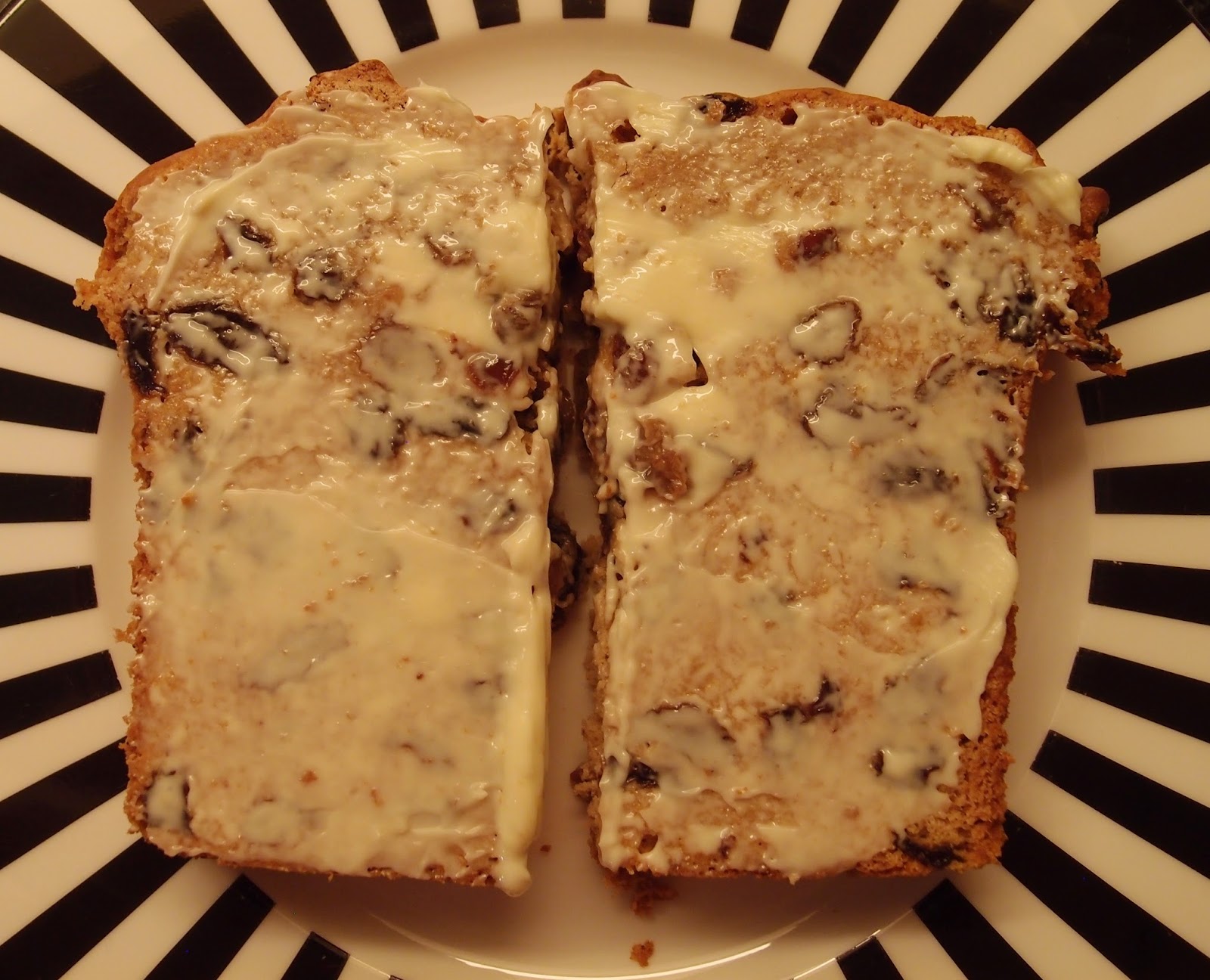
Thickly buttered fruit loaf is one of life’s great joys.  I always say that you can toast the loaf and then butter it, but I never have any left to get to do that!


Ingredients

340g dried fruit – I used dried mulberries and sultanas
60g glace cherries – chopped
110g dark brown soft sugar
200ml cold tea – I used 2 teabags to boost the flavour
225g self raising flour
1 egg


Method

The night before you wish to bake the cake: place the fruit, cherries and sugar in a bowl and mix with the tea.  Cover the bowl and leave - ideally overnight but longer won't hurt.

Day of baking: Preheat the oven to 190C/fan oven 170C/375F/gas mark 5.

Line a 900g loaf tin with baking paper.

Mix the flour and egg into the pre-soaked fruit mix – ensure it is well combined and no pockets of dry flour or egg remain.

Spoon into the prepared tin and level the surface.

Bake for approximately 1 hour or until a skewer inserted into the cake comes out clean.  If the cake is browning too quickly, don’t be afraid to cover it loosely with foil.

Leave to cool on a wire rack.

Serve in slices with butter thick enough to leave teeth marks when you bite into it!

Bask in the glory of the wonderful thing you have created.


Eat.

Sunday, 18 January 2015

Brown butter spice cake


Christmas may be over but winter is definitely here, which is why I was drawn to a spicy cake this week.  This cake had so many lovely facets that appealed to me: tea, spice, treacle, brown butter and even a bit of citrus.  All the flavours were offset by a very simple classic buttercream.


It’s worth taking your time over making the brown butter.  Your nose will tell you without any doubt that there is a huge difference between brown butter and burnt butter!  Gently heat the butter and it will become foamy; let this stage pass and the butter will turn clear and a wonderful dark amber colour…and it smells divine.  It’s also a bit like caramel in that you’re better to take it off the hob just before it’s at the stage you want, as it carries on darkening and you risk taking it too far.


This is such a comforting, homely looking cake but it packs in so much flavour – the best of all worlds.  The tea and citrus lifts what would otherwise be a lovely but ordinary dense gingerbread; I expected the cake to be more sponge-like but it isn’t – it’s definitely in the gingerbread camp.    Not sure what I did but my cakes came out huge!  I had to shave a bit off each one just to get it to a size that would fit in any of my storage tins!  Still, it gave me the opportunity to photograph a whole layer:


This cake is a keeper, by which I mean you’re best off making it a day or two in advance – it gets stickier and more flavoursome.  Bring on the snow – I’m ready for it!


Ingredients

For the cake:
250g unsalted butter
250g caster sugar
2 eggs
100g treacle
250ml tea, made using 2 teabags
Grated zest of 1 orange
600g self raising flour
1 teaspoon ground cinnamon
½ teaspoon ground ginger
½ teaspoon mixed spice

For the buttercream:
100g unsalted butter, at room temperature
1 teaspoon vanilla extract
200g icing sugar
1 tablespoon milk


Method


Preheat the oven to 180C/fan160C/350F/ gas 4. 
Line two loose bottomed 20cm round sandwich tins with baking paper.
Now make the cakes: melt the butter in a pan until it turns brown (but not burned).  Do this over a gentle heat – at first it will foam, but will brown shortly after.
Strain the butter through a coffee filter or several sheets of kitchen paper into a bowl and leave to cool.
Beat the cooled brown butter into the sugar, eggs and treacle.
Stir in the cooled tea and orange zest (I put the zest in the tea so that it infused the flavour into the tea).
In a separate bowl mix together the flour, spices and baking powder.
Beat the butter mixture into the flour mixture.
Divide evenly between the prepared tins and level the surfaces.
Bake for 20-25 minutes or until a skewer comes out clean.   Mine actually took a fair bit longer – nearer to 40 minutes.
Cool, in their tins, for 20 minutes before de-tinning and leaving to cool completely on a wire rack.
Now make the buttercream: beat the butter until it is soft and whippy.
Beat in the vanilla and icing sugar.
Beat in the water.
Place one of the cakes on the serving plate and spread the buttercream over it.
Place the other sponge on top.
Bask in the glory of the wonderful thing you have created.
Eat.


Sunday, 16 November 2014

Tea loaf cake


Classics become classics for a reason – usually because they’re great.  There is something about a tea loaf cake that is inherently nostalgic.  I feel it has always been in my life and I can clearly remember, from a young age, the smell of it being toasted and buttered to have with a cup of tea on Sunday afternoons.  Back then I wasn’t a fan of it being toasted but I like it now.


I enjoy making any recipe where soaking of fruit is involved, be it an alcoholic bath for Christmas cake fruits or – as in this instance – tea.  Each time I pass the bowl I cannot resist tinkering with it; carefully mixing the fruit to ensure each sultana and raisin gets a chance to soak and absorb the flavours.  What is unusual in this recipe is that you add the sugar at this stage too – I’d not seen that before.  The only thing to be aware of with this recipe is the soak time i.e. you need to start it a day before you wish to make it.  Other than that, it’s a doddle!


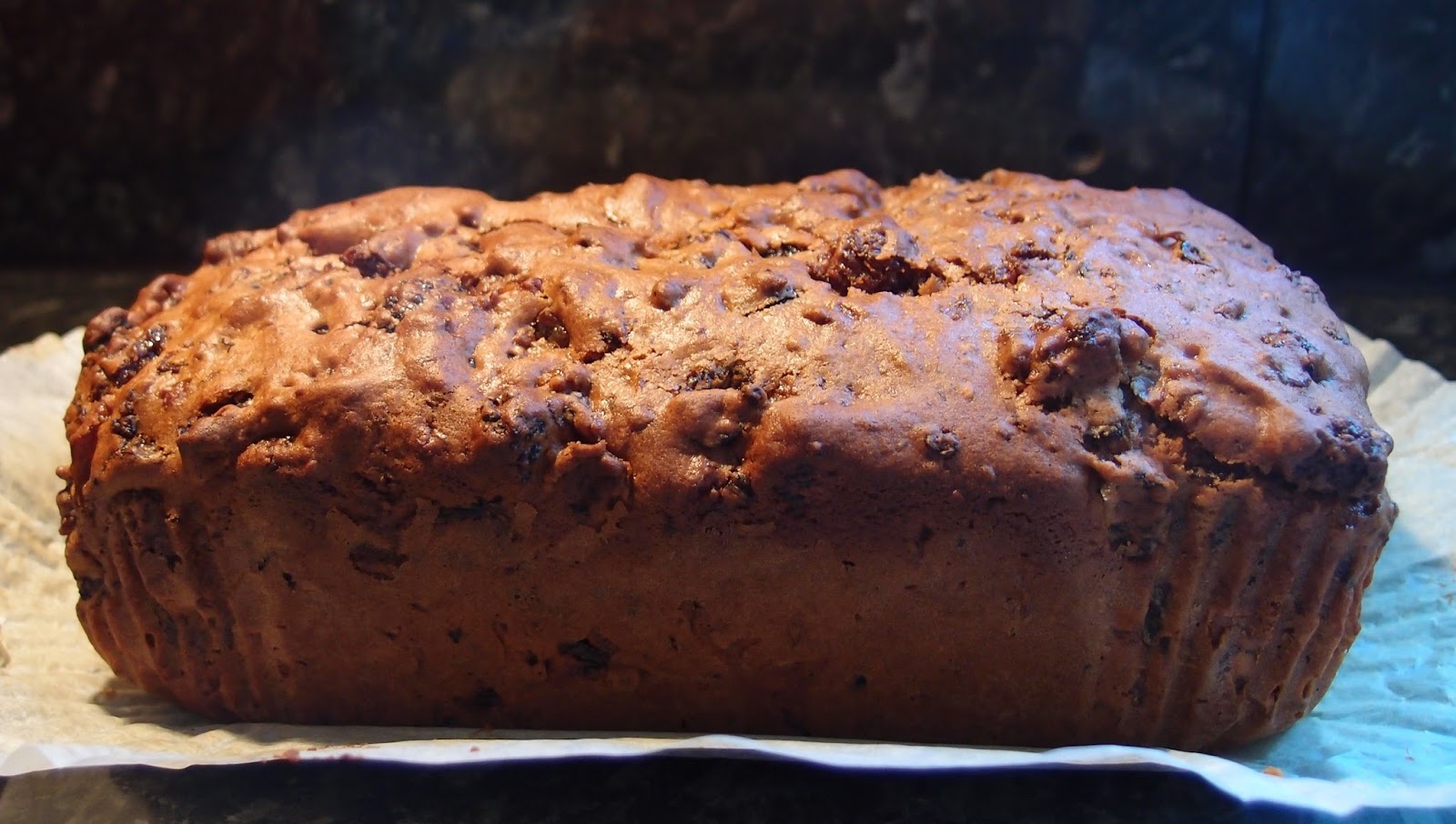
When you spoon the cake into the tin it will seem like the mix is all fruit and no cake.  That’s often the way with these sort of bakes but don’t worry, the magic of the oven will sort it all out and I promise you’ll end up with a lovely tea loaf!  Mine seems to have come out huge (even by my standards) – not sure why!


If you’ve read my blog for any length of time you will know my only rule for buttering a slice of fruit loaf: the butter has to be thick enough that you leave teeth marks in it when you take a bite.  If your dentist couldn’t identify you from the impression you have left in the slice of fruit loaf then you need to reconsider your approach to buttering. 


Ingredients

250g sultanas
250g raisins
250g caster sugar
375ml cold tea – any tea you like!
1 egg
500g self raising flour
1 teaspoon mixed spice
1 teaspoon grated nutmeg


Method

The day before baking place the sultanas, raisins, caster sugar and cold tea in a bowl and mix together. 

Cover the bow and leave to stand overnight.  Stir occasionally.

Preheat the oven to 180C/fan oven 160C/350F/gas mark 4.

Line a 900g loaf tin with baking paper.

Beat the egg and then stir into the bowl of soaked fruit.

Add the flour and spices to the fruit mix and stir well to ensure that everything is well combined and there are no clumps of flour.

Spoon into the prepared tin and level the surface.

Bake for approximately 1 hour or until a skewer inserted into the loaf comes out clean.

Leave to cool in the tin for 15 minutes before de-tinning and leaving to cool completely on a wire rack.

Serve in slices with thick butter.  As the loaf ages it is delicious to toast.

Bask in the glory of the wonderful thing you have created.


Eat.

Sunday, 2 June 2013

Tea-infused prune cake with honey buttercream


Prunes seem a divisive fruit, possibly because of bad childhood memories of bowls of stewed fruit so favoured by elderly relatives.  Perhaps I was an odd child (and adult) as I have always loved them.  I love their sticky sweetness and dark glossy looks.  With the dark sugar in this recipe, the prunes actually taste a lot like dates.  The CCD (Caked Crusader's Da) thought it was a sticky toffee cake...and I know what he meant;  only the spice suggests otherwise.


When I told Mr CC I was making a tea-infused prune cake this weekend his expression suggested I was joking and would I please tell him what I was really planning on making?  When he realised I wasn’t joking his expression changed to horror.  This occasionally happens re my choice of cake and invariably, a couple of days later Mr CC will try said cake (often at work, as he takes any leftovers in for his colleagues) and report ‘I tried a bit of [insert cake here] and do you know it was actually quite nice.’ This is always said in a tone that implies he finds this the most surprising thing in the history of the universe!


It seems odd adding teabags to a cake...remember to remove them before baking!  NB. I have two teabags in this photo as I doubled the quantities and made two cakes - the recipe below stating one bag is correct.


Perhaps I’m easily entertained but I always enjoy watching the bubbles created when I add bicarb to something:


This is a cake that smells great whilst baking – it’s fruity and the dark sugar gives off toffee aromas.  The cake settles on cooling but this isn’t an issue as it’s a big domed loaf when you take it out the oven.  The settling just makes it normal sized!


The recipe originally had a coffee buttercream and I didn’t see the point in pairing a tea-infused cake with such a flavour.  I changed it to a honey buttercream and thought the combination worked really well.


Ingredients

For the cake:
225g prunes – de-stoned and chopped
250ml water
1 teabag – use whichever tea you prefer, I used English breakfast
½ teaspoon bicarbonate of soda
85g unsalted butter, at room temperature
175g dark brown sugar
2 eggs
175g self raising flour
50g walnuts – very finely chopped
1 teaspoon mixed spice

For the buttercream:
110g unsalted butter, at room temperature
3 tablespoons honey
250g icing sugar


Method

Preheat the oven to 180°C/ fan oven 160°C/350°F/gas mark 4.

Line a 900g (2lb) loaf tin with baking paper.

Place the prunes and water into a saucepan (choose one a little larger than you think you need as the mix will bubble up when you add the bicarbonate of soda) and bring to the boil over a medium heat.

Remove from the heat and add the teabag.  Stir the mix so the teabag is buried under prunes.

Leave to infuse for five minutes.

Remove the teabag and stir in the bicarbonate of soda.  It will bubble up considerably.

Put to one side.

Now make the cake batter: beat together the butter and sugar until creamy.  It won’t become whippy or really light because of the ratios involved and the fact that it’s dark brown sugar rather than caster.

Beat in the eggs one at a time, adding a little of the flour if it looks like it might curdle.

Fold in the flour, walnuts and mixed spice.  You will have a very thick batter at this point – don’t worry!

Stir in the prunes (the liquid as well) and make sure that you mix it well, using a spatula to bring the thick batter up from the bottom of the bowl.

Pour (I used a ladle for greater control) the batter into the prepared tin.  The mix will be liquid enough to level itself.

Bake for approximately 40-50 minutes or until a skewer inserted into the cake comes out clean.  Don’t worry if it takes a little longer.

Leave to cool for 20 minutes in the tin, before removing from the tin and leaving to cool completely on a wire rack.

When the cake is cold you can make the buttercream: beat the butter and honey together until smooth and soft.

Add the icing sugar and beat – on a low speed at first – until the buttercream is smooth and has no hint of grittiness to it.  Grittiness is a sign that you haven’t beaten the buttercream enough to dissolve the sugar.

Pipe or spread the buttercream over the cake.

Serve in thick slices with a mug of tea.

Bask in the glory of the wonderful thing you have created.


Eat.

Sunday, 17 July 2011

Light fruit cake


I was on the horns of a dilemma whether to include this recipe on my site. On the one hand, fruit cake seems to be the most universally loathed category of cake, on the other hand I know that lots of people come to my site or email me asking whether I have a recipe for a Manor House style cake. Now I am as scathing about SBCs (that’s shop bought cakes – it’s bad luck to say it in full) as the next cake connoisseur but I have to admit that Manor House cake is a king amongst paupers.


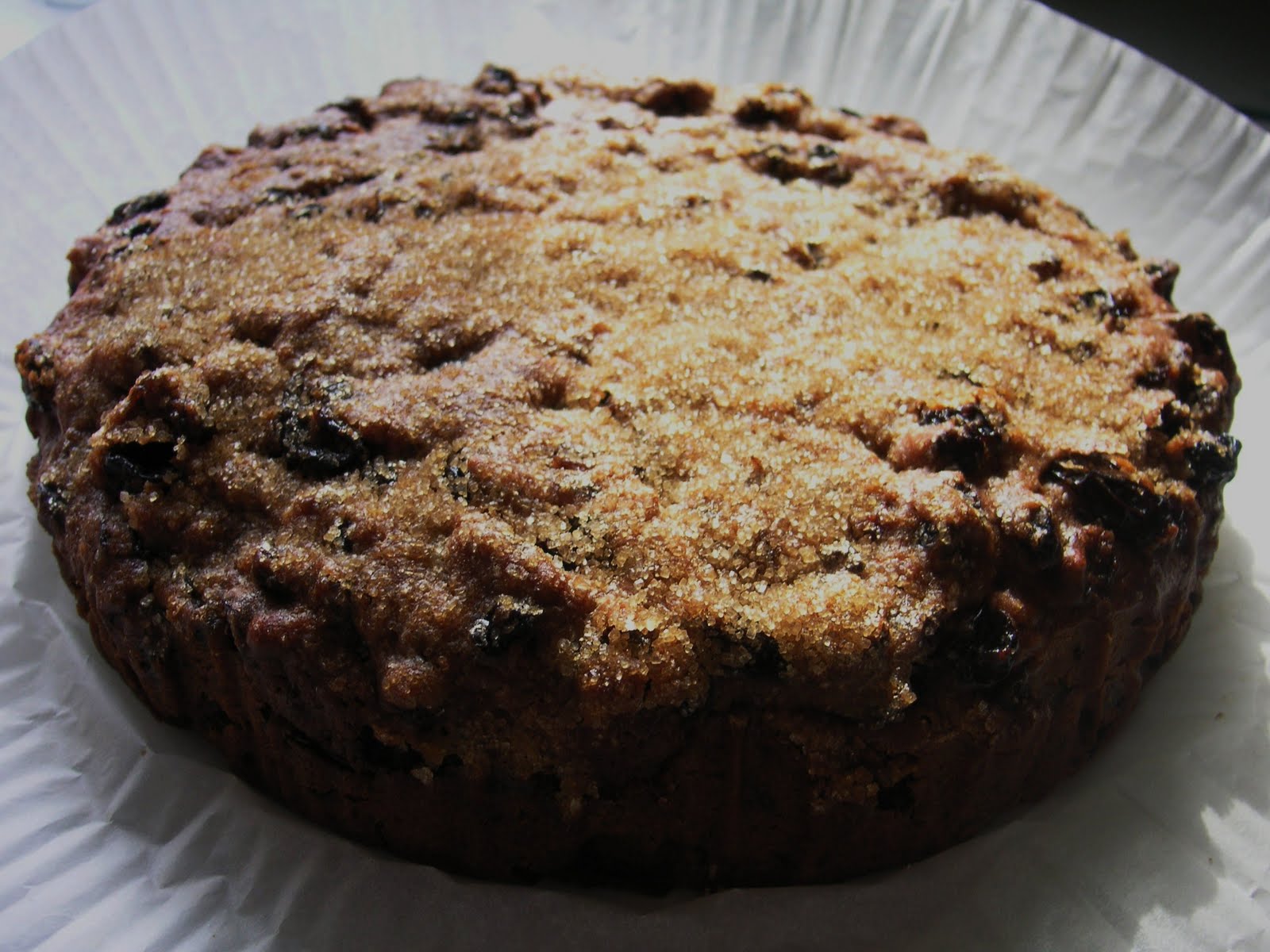
A light fruit cake is quite a different proposition to the heavy, rich dark cake that surfaces at Christmas. There are times when nothing in the world could be more tasty or comforting than a nice wedge of cake brimming with raisins and sultanas.


I would pitch this particular cake as the midpoint between the full-on Christmas cake and a sponge containing dried fruit.

The fruit is cooked in tea, sugar and butter and ends up looking like a treasure trove of lovely things:


Ingredients:

340g mixed dried fruit (I used raisins, sultanas and currants)

100g Demerara sugar, plus 2 tablespoons extra to sprinkle on top

150ml black tea (I used PG tips)

110g unsalted butter

170g self raising flour

½ teaspoon ground ginger

1 teaspoon ground cinnamon

½ teaspoon ground nutmeg

2 eggs, beaten

How to make:

Place the fruit, sugar, tea and butter in a large saucepan and bring to the boil over a medium heat. Stir until the butter has melted.

Reduce the heat and simmer for 20 minutes, stirring frequently.

Remove the pan from the heat and leave to cool.

Preheat the oven to 170°C/fan oven 150°C/325°F/Gas mark 3.

Line a 20cm round springform tin with baking paper.

Place the flour and spices into a large bowl and then stir in the cooled fruit (including the liquid) and the eggs. Work quickly.

Spoon into the prepared tin and level the surface.

Sprinkle the additional Demerara sugar over the surface, if desired.

Bake for 30 minutes then reduce the heat to 150°C/fan oven 130°C/300°F/Gas mark 2.

Cook for a further 1 ¼ - 1 ½ hours or until a skewer inserted into the cake comes out clean.

Leave to cool in the tin for approximately 15 minutes before removing and allowing to cool completely on a wire rack.

Bask in glory at the wonderful thing you have made.

Eat.

Sunday, 26 September 2010

Bara brith (Speckled bread)


When I saw this lovely loaf cake on
Sam’s blog
I knew I had to make it. The recipe comes from the North Wales Tourism website so it must be authentic; I stress that because I thought Bara brith always contained yeast and this, clearly, doesn’t.


I can’t ever think about Wales now without “
Gavin and Stacey” coming to mind.
It is one of my favourite comedies of recent times and I was trying to think how the Welsh characters would describe this cake. Stacey would definitely call it “lush” whereas my favourite character, Nessa, would probably go for a more measured, “tidy”.


There’s something enticing and comforting about a fruity slice of cake spread with creamy, rich, yellow butter.
As to how much butter – a friend of mine described this perfectly when she said “butter must be thick enough so you can leave teeth marks in it”. I couldn’t put it any better:


The most fun part of this recipe is soaking the fruit.
Whether in tea (as for this recipe) or spirits (Christmas cake) I can never resist peeking in the pot to see how much of the liquid has been absorbed. The fruit turns glossy and plump – it’s practically botox for dried fruit!


I think there’s no point blogging if you’re not going to be honest and, the whole time I was baking this cake, I truly believed it would end up in the bin.
So much so that as soon as it came out of the oven I started to bake a back-up cake! My first mistake was doubling the quantities to make two loaves – have you tried mixing that much fruit into a tiny amount of cake? Let’s just say that I now feel fully prepared to enter the next arm wrestling contest I come across. My second concern was that the mix was so dry; I added some milk until it at least started to look like a cake mix although milk was not included in the source recipe.

When the loaves came out of the oven they looked nobbly, hard and dry so I thought I should cut a slice to see what the inside was like.
At this point they were still definitely heading for the bin. The cut slice started to comfort me – the crust which formed during baking was just a crust and the inside was moist and fruity. I tasted it and was underwhelmed. Still heading for the bin. But something made me butter it and try it how it is meant to be eaten. Please now imagine the Hallelujah chorus playing at full volume in my kitchen because it was delicious! It so needs the butter (salted) to bring all the flavour and texture alive. It’s heavenly!


Ingredients

450g mixed dried fruit – I used a mix of sultanas, raisins, currants, and blueberries
300ml tea – make as usual but don’t add the milk!
2 tablespoons marmalade
1 egg
6 tablespoons soft brown sugar
1 teaspoon mixed spice – I put a little extra as I like it spicy!
450g self raising flour
Milk as necessary

To glaze: honey

Salted butter to serve


Method

Start by soaking the fruit for 24 hours. Place all the fruit in a bowl and cover with the tea. Stir when you happen to walk past!

Preheat the oven to 170˚C/fan oven 150˚C/325˚F/Gas mark 3

Line a 900g loaf tin with baking paper – this will help you to get the loaf out of the tin.

Mix the marmalade, egg, sugar, spice and flour into the bowl containing the fruit and tea.

Spoon into the loaf tin and level the surface.

Bake for approximately 1 hour and 45 minutes or until a skewer, inserted into the centre of the loaf, comes out clean. After about an hour of baking check that the loaf isn’t browning too much – if it is, either move it down a shelf in the oven or loosely cover the top with foil.

Leave to stand in the tin on a wire rack for 10 minutes then turn out onto the wire rack.

Use a pastry brush to cover the top of the loaf with honey. As the loaf is so warm, the honey will melt and become easy to work with.

The cake will keep for several days in an airtight tin.

Serve in slices, thickly buttered.

Bask in the glory of the wonderful thing you have created.

Eat.