It is the CCD’s (Caked Crusader’s Da) birthday and,
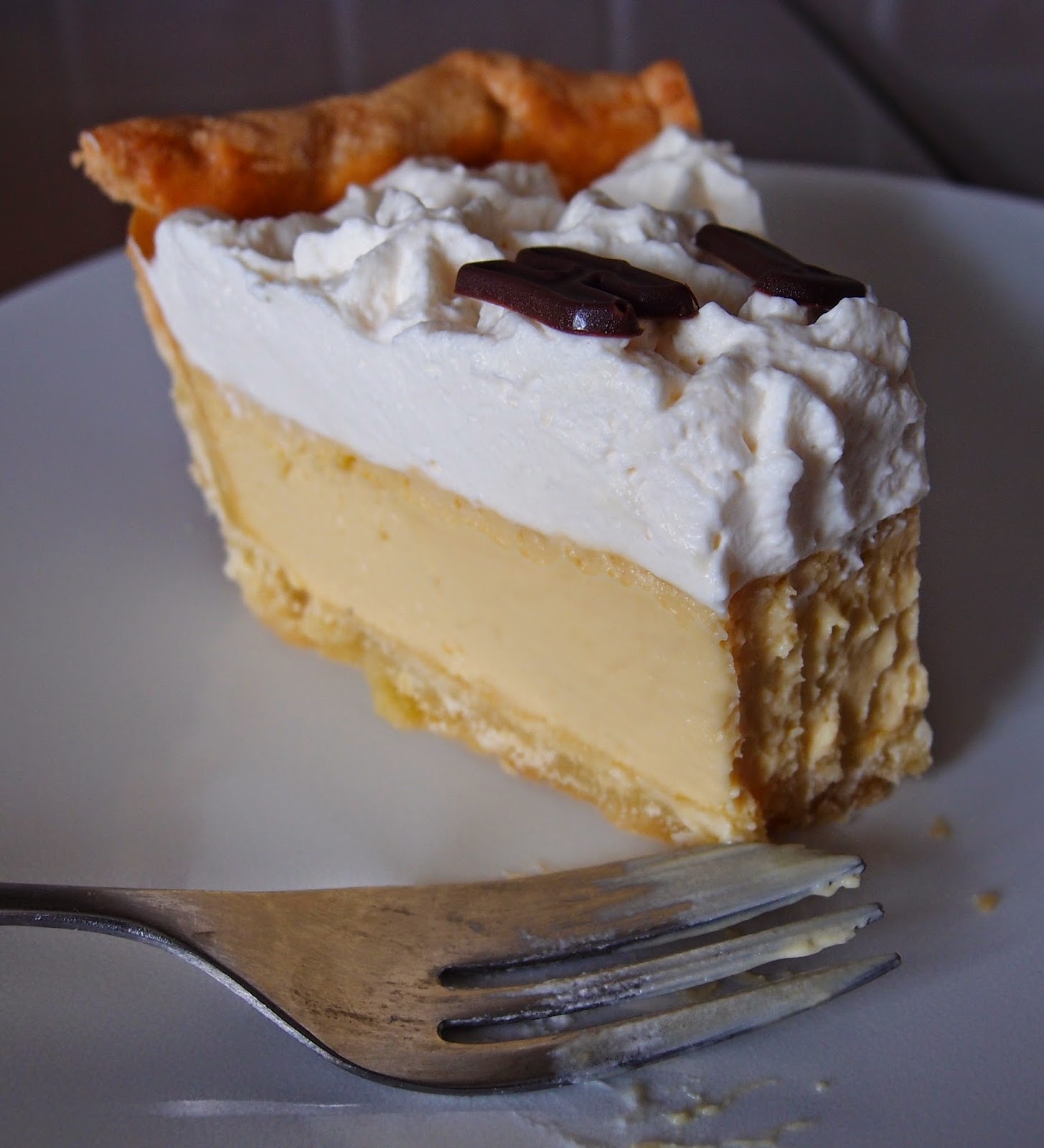
as I’ve noted before, he is rather partial to a custard tart. He’s also fond of booze. So why not combine the two? You'll see in the picture below that a bit of pastry got knocked off in transit. Mr CC tried to advise me to be more careful and started explaining about G
force and roundabouts but it didn’t make a lot of sense to me (I've never been scientific); all I remember
from his teachings is that Formula 1 drivers have thick necks.

In case you’re in any doubt let me confirm: Baileys custard tastes awesome! It smelled lovely cooking and tasted just as good. It’s not overpowering but adds some ‘oomph’ to the custard in a more gutsy way than vanilla does. You could vary the amount of Baileys you add: as long as the cream + Baileys = 500ml I think you’d be alright, as Baileys is very creamy.

I noticed that the filling cooked quicker than a standard vanilla custard tart and must therefore assume that the Baileys was responsible for this as it was the only difference to my standard recipe.

Don’t nine egg yolks look glorious?

Seeing as this was a custard tart for a special occasion I went all out and whipped up some more cream (because let’s face it, what this lacked was cream!) with more Baileys (ditto!) for a flavoursome and decorative addition.
Happy birthday CCD!
Ingredients
For the shortcrust pastry:
175g plain flour
120g unsalted butter, cold
3 tablespoons icing sugar
2 egg yolks
2 teaspoons vanilla extract
To glaze: 1 egg yolk, beaten
For the filling:
9 egg yolks
75g caster sugar
350ml whipping cream
150ml Baileys
Optional to decorate:
300ml whipping cream
50ml Baileys
Method
Start by making the pastry: put the flour, butter and icing sugar into the food processor and blitz until you get fine breadcrumbs.
Add the egg yolks and vanilla and blitz until the pastry just starts to come together.
Turn out onto a lightly floured surface and bring together into a ball of dough, handling no more than is absolutely necessary.
Chill the dough for 30 minutes so it is firmer to work with when you roll it out.
Line a baking tray with baking paper. Have to hand a 20cm round deep ring, or use a foil disposal pie tin (I did and makes leakage less of a worry). Whatever ring or tin you use, try to find a deep one (ideally 3.5cm) as this will give a lovely deep tart and a luscious thick layer of baked custard.
Roll out the pastry between two sheets of clingfilm and use to line the flan ring/pie tin.
Don’t worry if you have some tears, the pastry is good-natured and patches easily.
Let the pastry overhang the edges. Take some of the surplus pastry off and put to one side – you may need this for patching later on.
Chill the pastry for a further 30 minutes once the tin is lined to minimise shrinkage when baked.
Preheat the oven to 190°C/fan oven 170°C/375°F/Gas mark 5.
Line the chilled pastry with a sheet of baking paper and cover with baking beans.
Bake in the oven for 10 minutes.
Beat the egg yolk and when the 10 minutes is up, remove the pastry from the oven and remove the paper and beads. Have a look at the pastry and use the spare that you put to one side to patch any little holes or cracks that you can see. When happy, brush all of the egg yolk over the interior of the pastry case and return to the oven for 5 minutes. This seals the pastry so that it won’t go soggy when you add the custard.
Remove the pastry from the oven and leave to cool. When it is cool enough to handle trim the excess pastry away using a serrated knife. Leave the pastry in the ring/tin.
Reduce the oven temperature to 150°C/fan oven 130°C/300°F/Gas mark 2.
From now on it’s all easy! Make the custard by whisking together the egg yolks and sugar. Add the cream and Baileys and whisk again.
Pour through a sieve into a heavy saucepan. Don’t skip this stage as there’s lots of eggy bits that will get caught by the sieve and would make the custard lumpy in texture if not removed.
Heat the custard over a low heat stirring all the time. When it gets to 37°C remove it from the heat.
Pouring through a sieve, pour as much of the custard into the pastry case as possible. I got all of mine in but it will depend on how deep your ring/tin is. If you’re not confident that you’ll get the tart into the oven without spilling the custard, put the tray (with the tart case on it) onto the oven shelf and then pour the custard in. I would’ve done this but when I pull my oven shelf out it dips slightly so I could not have got all the custard in.
Bake for 35-40 minutes or until the custard looks set but still wobbles slightly when the tray is moved. NB. This is less time than I would normally recommend for a custard tart but the Baileys seemed to speed up the cooking process.
Leave to cool on a wire rack.
Refrigerate until you are ready to serve.
Shortly before serving whip up the cream and Baileys and pipe onto the top for some extra decadence.
Bask in glory at the wonderful thing you have made.
Eat.
300ml whipping cream
50ml Baileys
Method
Start by making the pastry: put the flour, butter and icing sugar into the food processor and blitz until you get fine breadcrumbs.
Add the egg yolks and vanilla and blitz until the pastry just starts to come together.
Turn out onto a lightly floured surface and bring together into a ball of dough, handling no more than is absolutely necessary.
Chill the dough for 30 minutes so it is firmer to work with when you roll it out.
Line a baking tray with baking paper. Have to hand a 20cm round deep ring, or use a foil disposal pie tin (I did and makes leakage less of a worry). Whatever ring or tin you use, try to find a deep one (ideally 3.5cm) as this will give a lovely deep tart and a luscious thick layer of baked custard.
Roll out the pastry between two sheets of clingfilm and use to line the flan ring/pie tin.
Don’t worry if you have some tears, the pastry is good-natured and patches easily.
Let the pastry overhang the edges. Take some of the surplus pastry off and put to one side – you may need this for patching later on.
Chill the pastry for a further 30 minutes once the tin is lined to minimise shrinkage when baked.
Preheat the oven to 190°C/fan oven 170°C/375°F/Gas mark 5.
Line the chilled pastry with a sheet of baking paper and cover with baking beans.
Bake in the oven for 10 minutes.
Beat the egg yolk and when the 10 minutes is up, remove the pastry from the oven and remove the paper and beads. Have a look at the pastry and use the spare that you put to one side to patch any little holes or cracks that you can see. When happy, brush all of the egg yolk over the interior of the pastry case and return to the oven for 5 minutes. This seals the pastry so that it won’t go soggy when you add the custard.
Remove the pastry from the oven and leave to cool. When it is cool enough to handle trim the excess pastry away using a serrated knife. Leave the pastry in the ring/tin.
Reduce the oven temperature to 150°C/fan oven 130°C/300°F/Gas mark 2.
From now on it’s all easy! Make the custard by whisking together the egg yolks and sugar. Add the cream and Baileys and whisk again.
Pour through a sieve into a heavy saucepan. Don’t skip this stage as there’s lots of eggy bits that will get caught by the sieve and would make the custard lumpy in texture if not removed.
Heat the custard over a low heat stirring all the time. When it gets to 37°C remove it from the heat.
Pouring through a sieve, pour as much of the custard into the pastry case as possible. I got all of mine in but it will depend on how deep your ring/tin is. If you’re not confident that you’ll get the tart into the oven without spilling the custard, put the tray (with the tart case on it) onto the oven shelf and then pour the custard in. I would’ve done this but when I pull my oven shelf out it dips slightly so I could not have got all the custard in.
Bake for 35-40 minutes or until the custard looks set but still wobbles slightly when the tray is moved. NB. This is less time than I would normally recommend for a custard tart but the Baileys seemed to speed up the cooking process.
Leave to cool on a wire rack.
Refrigerate until you are ready to serve.
Shortly before serving whip up the cream and Baileys and pipe onto the top for some extra decadence.
Bask in glory at the wonderful thing you have made.
Eat.